
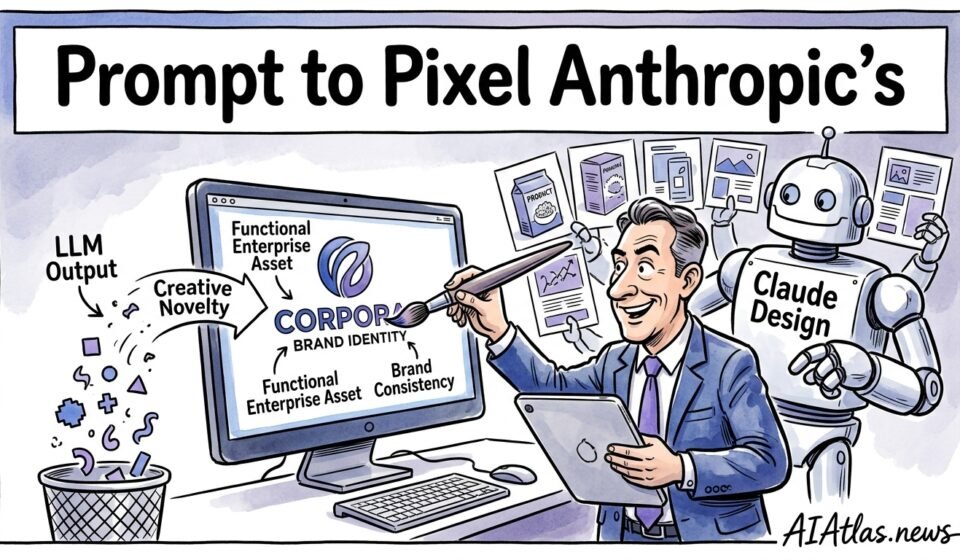
From Prompt to Pixel: Anthropic’s Claude Design Democratizes Generative AI for All Creators
The Strategic Objective
We are seeing a distinct maturation in the generative design sector. Anthropic’s latest text-to-visual feature launch signals a definitive move away from creative novelty towards functional enterprise asset generation. For founders and design agency principals, this is not merely a software update; it is an opportunity to bridge the notoriously wide gap between raw text output and professional-grade brand consistency.
In our experience assessing startup burn rates, erratic creative production remains a silent capital sink. When operations teams lack technical design skills, they either bottleneck the design department or push sub-par visual assets to the market. By deploying Claude Design correctly, you reduce the technical barrier for high-fidelity output, effectively turning your operations staff into capable design stewards capable of scaling commercial campaigns.
Prerequisite Checklist
Before writing a single prompt, your organisation must establish foundational constraints. We frequently watch entrepreneurs burn through credits and hours generating unusable graphics simply because they skipped the foundational setup. You must codify your brand identity into a machine-readable format before attempting to automate its generation.
This means collating exact hex codes, typography rules, negative space guidelines, and disallowed visual cliches into a central reference document. Furthermore, your team must designate a clear operational owner. Decentralised access without strict governance guarantees a fragmented brand presence across your commercial touchpoints, ultimately confusing your target market.
Sequence of Operations
Translating complex generative workflows into actionable steps requires rigorous operational discipline. We have mapped the most efficient path for integrating Anthropic’s capabilities into your daily production cycle without inflating your operational overhead.
We continually advise our portfolio companies that execution matters far more than the underlying algorithmic model. To prevent cash bleed during implementation, your team must adhere strictly to a sequential production methodology, avoiding the temptation to skip straight to final outputs.
Establishing the Semantic Foundation
Your first move is to translate visual brand guidelines into semantic text. Claude operates on language, meaning your visual identity must be described in precise, descriptive terms. We recommend creating a master prompt that details your brand’s mood, lighting preferences, and core colour palette.
Architecting the Prompt Protocol
Once the foundation is set, construct a modular prompt architecture. Do not write prompts from scratch for every asset. Instead, build a template where users only change specific variables—such as the subject matter or context—while the foundational brand instructions remain static and locked.
Generating the Base Assets
Begin generation by casting a wide net with low-fidelity test outputs. At this stage, you are checking the model’s interpretation of your prompt architecture. Do not aim for perfection on the first run; aim for correct structural alignment with your brand’s overarching aesthetic constraints.
Iterative Refining and Alignment
This step requires a human-in-the-loop to evaluate the base assets against your brand rulebook. If an image features incorrect typography spacing or off-brand colour grading, use Claude Design’s targeted refinement features to correct isolated elements rather than regenerating the entire image and risking prompt drift.
Exporting and Asset Categorisation
The final step involves exporting the approved assets in enterprise-ready formats. Integrate these outputs directly into your digital asset management system with clear meta-tags. Proper archiving prevents duplicate generation efforts and builds a proprietary dataset of approved visual styles for future reference.
Common Failure Points
We routinely conduct post-mortems on failed automation initiatives, and the design sector provides remarkably consistent data. The most common commercial failure occurs when operators trust the model’s default aesthetic preferences over strict brand guidelines. This leads to a dilution of visual identity, eroding market trust and undoing expensive brand-building efforts.
Another severe pitfall is prompt drift, where sequential iterations pull the design further away from its initial commercial purpose. Founders must train their staff to recognise when an iteration cycle has failed and when to restart the process entirely, rather than attempting to salvage a visually compromised output that will eventually be rejected by the market.
Internal Tooling Versus Outsourced Agencies
Understanding when to build internal workflows versus when to farm out creative work is a critical judgement call for any business leader. The decision fundamentally alters your overhead structure and your team’s speed to market. We have observed that integrating tools like Claude Design shifts the calculus heavily in favour of internal production for routine, high-volume assets.
However, outsourcing remains highly relevant for flagship brand campaigns requiring deep human empathy, cultural nuance, and strategic market positioning. The table below outlines the commercial trade-offs between managing an internal text-to-visual workflow and retaining an external design agency.
| Commercial Metric | Claude Design (Internal) | Design Agency (Outsourced) |
|---|---|---|
| Cost Structure | Low fixed software overhead | High variable retainer fees |
| Speed to Market | Near-instant iterations | Multi-day feedback cycles |
| Brand Consistency | Requires strict prompt governance | Managed via human oversight |
| Volume Scalability | Exceptionally high | Limited by human bandwidth |
| Creative Originality | Derivative of training data | High bespoke strategic value |
Visualised Workflow Roadmap
To commercialise this technology effectively, visualising the operational flow is essential. A conceptual roadmap allows stakeholders to see precisely where human intervention is necessary and where the automated engine takes the heavy operational load off your team.
We have designed the following workflow to illustrate the journey from raw text inputs to final enterprise assets. Implementing this specific sequence prevents the bottlenecking that typically plagues early-stage adoption and ensures a smooth transition to scalable production.
Phase One: Strategy & Constraint Definition (Human Led)
Phase Two: Architectural Prompt Engineering (Human Led)
Phase Three: High-Fidelity Asset Generation (Machine Led)
Phase Four: Human-in-the-Loop Verification (Collaborative)
Phase Five: Commercial Deployment & Archiving (System Led)
Verification and Success Metrics
You cannot manage what you do not measure. In our internal audits, we define success not by the raw volume of images generated, but by the measurable reduction in production overhead and the strict preservation of brand fidelity. Your commercial metrics should focus squarely on time-to-market and asset usability rates to justify the operational shift.
We track the average time required to push an asset from a raw concept to a final, published state. As visualised in the comparison below, integrating structured text-to-visual workflows drastically compresses the production timeline for standard enterprise assets, freeing up valuable capital for core business activities.
The Long-Term Maintenance Plan
Adopting text-to-visual systems is an ongoing operational commitment, not a singular deployment event. Your brand guidelines will naturally evolve, and the underlying models will undergo updates that subtly alter their output characteristics. To maintain consistency, your operational owner must schedule quarterly reviews of your prompt libraries and foundational brand documentation.
Ultimately, the goal is to build an enduring system that scales seamlessly alongside your enterprise. By treating your prompt architecture and quality assurance protocols as living assets, you safeguard your brand’s visual integrity against the rapid flux of technological updates, ensuring sustained commercial value and operational efficiency over the long term.
Frequently Asked Questions
We regularly field inquiries from agency principals regarding the practical realities of integrating these tools. Below are the most pressing questions we encounter during implementation audits.
Addressing these concerns directly ensures your operational teams remain focused on value creation rather than getting bogged down in technological anxiety.
Frequently Asked Questions
- Will Claude Design replace our in-house design team?
- No. It acts as an operational multiplier for your existing staff, allowing senior designers to focus on complex, high-value strategy rather than grinding out routine social media assets.
- How do we ensure copyright safety with generated assets?
- You must pair AI generation with strict human oversight. We recommend running final commercial outputs through standard reverse-image searches to verify originality and mitigate infringement risks.
- What is the most common reason for poor visual output?